
Home Cleaning9 min read
A cleaning routine should support the way a household actually lives, not demand a perfect home every evening. When work, school and family activities compete for attention, the most useful plan is one that distinguishes daily hygiene from occasional detail work.
Start with the spaces that carry the day
In most homes the kitchen and bathroom need the most frequent attention. Food residue, moisture and shared touch points accumulate more quickly than dust on a spare-room shelf. Spend a few minutes wiping counters, putting dishes away and drying wet surfaces before adding less urgent tasks.
A practical order of work
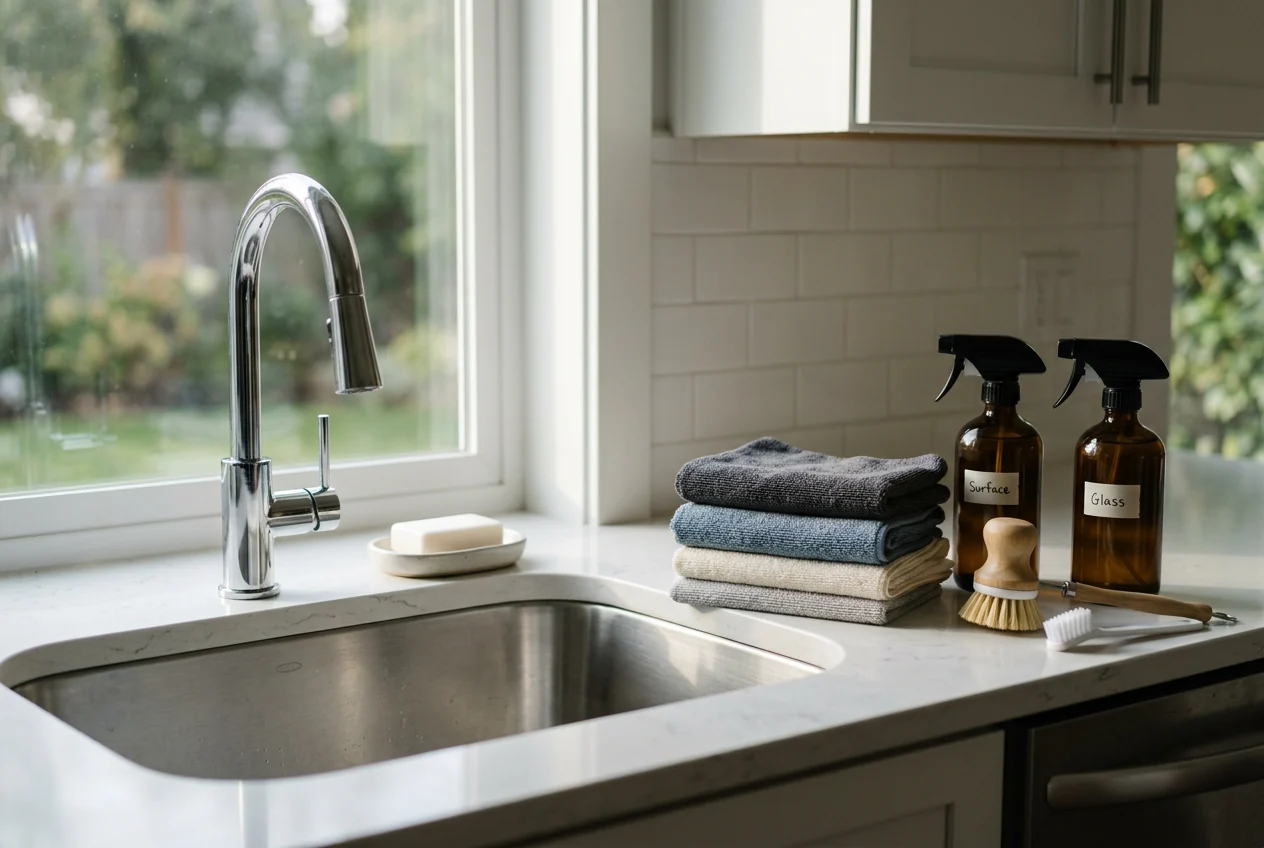
Keep supplies where they are useful but safely out of reach of children and pets. A microfiber cloth, an appropriate surface cleaner and a small brush can cover many ordinary tasks. Follow product labels, ventilate when recommended and never mix cleaning chemicals.
Materials and safety
If weekly chores keep expanding beyond the available time, residential house cleaning can support the routine rather than replace it. Explain which rooms need consistent upkeep and which detail tasks you prefer to handle yourself.
When to bring in a cleaning crew
If weekly chores keep expanding beyond the available time, residential house cleaning can support the routine rather than replace it. Explain which rooms need consistent upkeep and which detail tasks you prefer to handle yourself.
A final walkthrough
Before calling a space finished, step back and look at it as someone entering for the first time. Check that surfaces are dry, tools are put away and any moved items have been returned. Notice what still needs attention and put it on the next list rather than repeatedly cleaning a single spot while the rest of the room waits.
- Confirm the agreed rooms and priority surfaces have been addressed.
- Check high-touch areas such as handles, switches and counters.
- Look over floor edges and corners in good natural light.
- Store products safely and let freshly cleaned surfaces dry.
The right plan is the one you can keep. Some homes benefit from small daily resets; others need a deeper seasonal visit or extra help at a transition. If you are unsure which level of cleaning fits your space, describe the rooms and your priorities when requesting a quote.
What to discuss before scheduling
Describe the condition of the space honestly. Mention pets, stairs, fragile finishes, unusual buildup and anything that should not be touched. Ask which supplies are provided and whether there are any tasks outside the regular scope. This conversation makes expectations clearer for everyone and helps prevent last-minute changes.
Walk through the practical details too: parking or access instructions, when the space will be available and who can answer a question on the day. If a task depends on moving heavy furniture, opening locked rooms or handling specialty materials, agree on that explicitly rather than assuming it is included.
If weekly chores keep expanding beyond the available time, residential house cleaning can support the routine rather than replace it. Explain which rooms need consistent upkeep and which detail tasks you prefer to handle yourself.
Keep the result easier to maintain
After a thorough clean, focus on the habits that protect the result. Wipe spills promptly rather than allowing residue to harden. Give commonly used items a consistent home so counters remain accessible. In wet areas, allow air to circulate and dry surfaces where practical.
A maintenance list should be short enough to use. Divide it into daily, weekly and less frequent tasks, then adjust it after a month. If one room consistently needs more attention, shift time toward that room instead of treating every surface equally.
Keep supplies where they are useful but safely out of reach of children and pets. A microfiber cloth, an appropriate surface cleaner and a small brush can cover many ordinary tasks. Follow product labels, ventilate when recommended and never mix cleaning chemicals.
Choose the scope that fits your situation
A routine visit usually concentrates on regularly used, accessible areas. Detailed work takes longer because it includes more edges, fixtures or buildup. A transition clean may happen in an empty property and require attention to spaces normally hidden behind belongings. The right choice depends on condition and priorities, not just the square footage.
Ask for a clear description of what is and is not included. If you have a deadline, share it early so the work can be planned around access and drying time. A realistic scope is better than promising everything at once and rushing the most important spaces.
If weekly chores keep expanding beyond the available time, residential house cleaning can support the routine rather than replace it. Explain which rooms need consistent upkeep and which detail tasks you prefer to handle yourself.
Review and adapt the plan
Once the work is complete, check the priority areas before deciding what to tackle next. A photograph can help you remember the starting condition, but it does not replace a careful walkthrough. Make note of any spots that require special products or more frequent attention.
Revisit the plan as seasons and household use change. More guests, a move or a shift in office occupancy can alter where dirt collects. Keeping the checklist flexible makes it useful instead of another chore to manage.
In most homes the kitchen and bathroom need the most frequent attention. Food residue, moisture and shared touch points accumulate more quickly than dust on a spare-room shelf. Spend a few minutes wiping counters, putting dishes away and drying wet surfaces before adding less urgent tasks.
Break the week into smaller resets
A schedule is more sustainable when a missed day does not ruin the whole plan. Try a brief kitchen reset after dinner: clear food from counters, wash or load dishes and wipe spills. On another day, pay attention to the bathroom sink and mirror. Save floors for a time when people are not moving continuously through the house. Each small task has a clear finish line.
Think about traffic rather than treating every room identically. An entry used by children, visitors and pets may need frequent sweeping, while a closed guest room can wait. Keep a list of recurring trouble spots on the fridge or in a shared calendar. When everyone knows what matters this week, cleaning becomes less dependent on one person remembering it all.
Make supplies easy to manage
Many households collect multiple bottles that do the same job. Read the label and select a product suitable for each surface instead of reaching for the strongest one. Separate bathroom cloths from kitchen cloths and launder reusable items according to their care instructions. Replace tools that no longer rinse clean or leave lint behind.
Use ventilation when the product instructions recommend it. If young children or pets are present, close bottles securely and store them out of reach immediately after use. Do not pour chemicals into unmarked containers. A small, dependable set of supplies usually makes a routine easier than a crowded cupboard of rarely used products.
Share the work clearly
A household routine works better when tasks are assigned, not vaguely expected. A person who cooks might wipe the stovetop afterward; someone else can empty bins or reset the entryway. Choose tasks appropriate to each person's age and ability, and agree on what 'finished' means. A five-minute pickup before vacuuming can save much more than five minutes later.
If weekends are already full, it is reasonable to request help with the more time-consuming work. Tell a cleaning provider what you do during the week and which tasks keep slipping. That way a visit complements your routine instead of duplicating work you already manage.
Revisit the routine after a month
A plan that looks sensible on paper may not match how a household really lives. After a few weeks, look at which tasks are done easily and which are consistently missed. Perhaps the kitchen needs a shorter daily reset while the entryway needs more attention on rainy days. Change the schedule instead of treating missed tasks as a failure.
Keep a short seasonal list outside the weekly routine. Washing reachable light fixtures, wiping rarely used shelves and reviewing stored supplies do not all need to happen every week. Breaking them into occasional jobs prevents the normal checklist from becoming too long to follow. If several deeper tasks build up at once, choose one room at a time or consider arranging help for a focused reset.
A simple example of a flexible week
On Monday, reset the entryway and put shoes, bags and loose papers in their places. Midweek, take ten minutes to check sinks, counters and bins. On a day with more time, vacuum the areas most used by the household and deal with a single neglected spot. These are examples, not fixed rules: swap days to fit your commitments. A family with pets may move floor care earlier, while a family that cooks often may prioritize the kitchen instead.
At the end of the week, ask whether the routine made the home easier to use. If one room still feels difficult to maintain, remove an unnecessary task elsewhere and give that room the saved time. A routine should feel manageable even during a busy week, not only when everyone is at home and nothing unexpected happens.